Negative Pressure Rooms
CBRNe threat containment for ASAP III mail screening systems

Negative Pressure Rooms (NPRs) are air-tight enclosures used to house dangerous human-intensive inspection processes. Many such rooms are currently being used for front-end postal operations in government departments and high-profile private businesses.
The negative pressure room is driven by powerful fans under the perforated downdraft table surface which pull potential threats away from personnel while also drawing in and circulating HEPA-filtered fresh air.
Research International offers both standard and custom examination rooms and mail screening monitoring equipment to prevent such incidents. If you are evaluating a mail screening program, explore our Postal Processing Seminars.
Keeping Staff and Workplace Safe from CBRNe Threats
Protect Employees on the Front Line
A white powder or other mail room CBRNe incident can be life-threatening. Keep your staff safe from threats like anthrax and ricin.
Avoid Costly Building Closures and Cleanup
A CBRN contamination incident can mean long-term facility closure, and cleanup can cost millions. A negative pressure room contains the threat.
Suitable for Fixed or Mobile Installations
Each NPR is designed to meet your requirements and fit your budget. Short on space? Your NPR can also be installed in a trailer.
Typical Product Features
Each negative pressure room is custom-designed for the unique needs and budget of our customers. Features may include some or all of the following options:
Product Applications
Operational Details
Overview
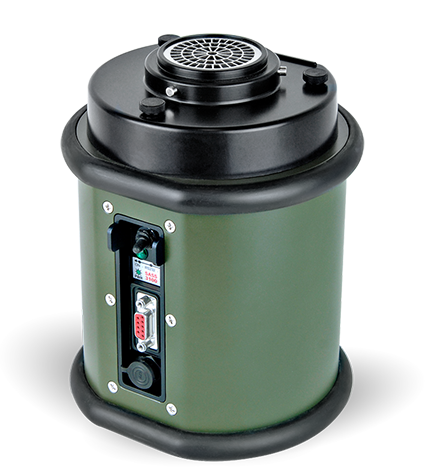
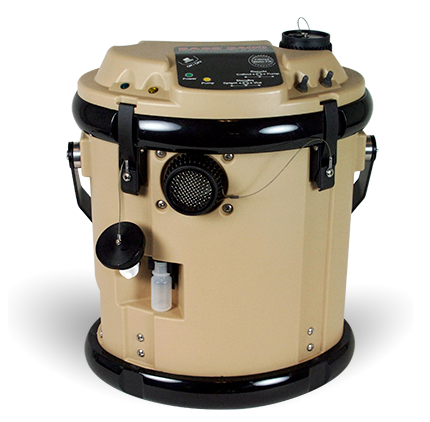
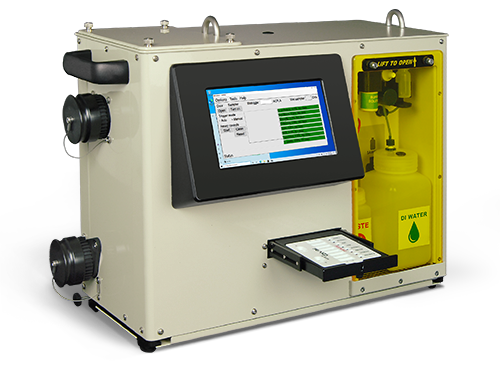
Negative pressure rooms provide a controlled environment for inspection operations and generally include one or more D1000 downdraft tables and various CBRNE monitoring devices such as the ASAP III or ASAP V, depending on the customer’s threat profile. In this way, many types of dangerous substances that may come in with postal or other items are identified and contained before being released into a governmental or business work area where many lives might be lost and/or costly infrastructure damaged.

Construction & Pressure
NPRs are typically constructed of light-weight aluminum extrusions and transparent high-strength polycarbonate plastic (Figure 1). Transparency minimizes claustrophobia for workers inside the room and allows visual surveillance of operations from outside. The rooms operate slightly below ambient atmospheric pressure. Incoming and exhaust air are both filtered through high-efficiency HEPA filters, and access is often via air-lock doors—creating an environment similar to an electronic or pharmaceutical clean room. Workers with allergies often find that working in the rooms greatly relieves breathing problems.
Downdraft Strategy
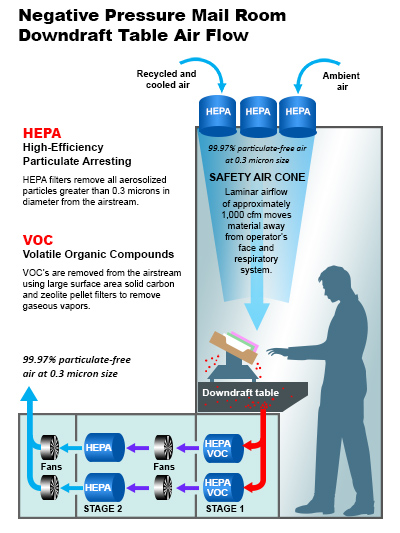
Fresh air is injected into the room from roof-mounted fixtures, creating downdraft conditions within the room (Figure 2). The source may be either ambient air or recycled NPR air that has been thoroughly filtered and cooled. Depending on room size, multiple filtered downdraft air injection vents are installed. Air handlers with HEPA discharge filters remove air from the room. A typical system completely changes the air once every minute.
For comparison, United States OSHA standards for smoking lounges require only 60 CFM per person—a rate nearly ten times less than an NPR.
Air Handling & Filtration
The NPR’s environmental control system utilizes proven HEPA filtration technology for particulate control and carbon/zeolite filtration for chemical gas control. The HEPA filters employed have an efficiency of 99.97% or better for particles > 0.3 µm (a single anthrax spore is ~1.0–1.5 µm in diameter).
It is generally possible to couple the exterior air handlers discharging air from the NPR with the D1000 downdraft tables so that each exhaust filter ensemble contains a foam large-debris prefilter, two HEPA elements in series, and an activated carbon/zeolite filter (Figure 3).

Air is filtered as it enters from the ceiling and then filtered twice more as it leaves the room. The system is deliberately redundant to provide maximum safety to employees both inside and outside the room. In practice, filtered air discharged from the room is so clean that customers have reported noticeable particulate reductions in surrounding office areas after installing an NPR.
Trailer Installations
If there is no space for the negative pressure room inside the building, the fully-functioning NPR can be installed in a trailer, providing mobility for organizations with multiple locations.

Contact
For further information on a negative pressure room for your application, contact us at info@resrchintl.com or 1-360-805-4930.